Tuesday, 16 February 2010

Book Review: The Souls of Black Folk

The Souls fo Black Folk

The Souls of Black Folk by W.E.B. Du Bois

Category: Non-fiction

Challenges: The Classic Circuit, POC Challenge

My Thoughts: Let me start this review by saying that I am white. I am blond, blue eyed Swedish Irish American. All that is needed for me to turn a lovely lobster red is for me to THINK about the sun. The reality that faced W.E.B DuBois is probably as far from any reality I will ever come, yet this book spoke to me. It spoke loudly. I found myself agreeing with what was written. I made notes in the margin. I made exclamation marks. I could fully understand the reality he was describing. To me that is the mark of a great book.

The first two sections of the book deals with the history of the black people. It tells of the mistakes and mismanagement that followed the emancipation proclamation and the problems that followed primarily in the south. Although deep down in my history brain I knew much of this (I have one year of post civil war American history) some of it felt very new. I had the general idea that it had not been handled well but to see how it had been handled badly was really good. 

The third section lays out the problems caused by previous leaders within the community. Du Bois primarily criticises Booker T. Washington for having sold the blacks cheap by not insisting on suffrage and higher education. The need for education and suffrage become cornerstones in the rest of the book.

The fourth and fifth sections deal with the importance of education in order to allow everyone to reach their full potential. Du Bois is critical to the idea that coloured people should not have universities. He is of the opinion that a university education for some coloured people is vital in order for everyone to get the best education. At one point he says:

“Progress in human affairs is more often a pull than a push, a surging forward of the exceptional man, and the lifting of his duller brethren slowly and painfully to his vantage-ground. Thus it was no accident that gave birth to universities centuries before the common schools, that made fair Harvard the first flower of our wilderness.

I found this very interesting. Often we talk about the importance of universal education. Making sure everyone goes through grade school but often university education is seen as something for the elite. The fact that you need someone to educate at the mass level is somehow forgotten. The need to drag everyone along with them.

The book then goes on to describe the life of those in the south. The poor conditions and the cultural practices that are legacies of slavery. He talks about the living conditions that the coloured people were forced to endure due to poverty and a lack of education. He describes the family breakdowns that were caused by poverty.

He also criticises the system of loans to grow cotton and how merchants except only cotton crops as security on these loans meaning that the poor are forced into growing crops that don’t give them the best profit. And therefore stops them from getting out of poverty, and indirectly stops them from working hard. Why work hard if you wont get anything for it? This particular argument feels very relevant today with regards to third world debt and the subprime mortgages.

He criticises the churches for perpetuating the segregation of the south but also for allowing the subjugation of the coloured people in the first place. The use of the church to keep slaves enslaved was, according to Du Bois, a contributing factor to problems of morals within the coloured community.

Technically this is a very well written book. The continued use of the image of the veil and the use of the phrase “the valley of the shadow of death” invokes the Bible in a very significant way. I want to quote large parts of the text to you because they were so beautiful but I am going to limit myself to just a few:

“Herein lie buried many things which if read with patience may show the strange meaning of being black here at the dawning of the Twentieth Century. This meaning is not without interest to you, Gentle Reader; for the problem of the Twentieth Century is the problem of the color line. I pray you, then, receive my little book in all charity, studying my words with me, forgiving mistake and foible for sake of the faith and passion that is in me, and seeking the grain of truth hidden there”.

This is the start of the book. Isn’t this just the most beautiful introduction to a book ever. It made me swoon.

“The history of the American Negro is the history of this strife,—this longing to attain self-conscious manhood, to merge his double self into a better and truer self. In this merging he wishes neither of the older selves to be lost. He would not Africanize America, for America has too much to teach the world and Africa. He would not bleach his Negro soul in a flood of white Americanism, for he knows that Negro blood has a message for the world. He simply wishes to make it possible for a man to be both a Negro and an American, without being cursed and spit upon by his fellows, without having the doors of Opportunity closed roughly in his face”.

This quote just sums up so much of what is wrong in the world still that I had to include it.

This final quote made me cry!

“He died at eventide, when the sun lay like a brooding sorrow above the western hills, veiling its face; when the winds spoke not, and the trees, the great green trees he loved, stood motionless. I saw his breath beat quicker and quicker, pause, and then his little soul leapt like a star that travels in the night and left a world of darkness in its train. The day changed not; the same tall trees peeped in at the windows, the same green grass glinted in the setting sun. Only in the chamber of death writhed the world's most piteous thing—a childless mother”.

The language is jus so beautifully balanced and sad and just wonderful. And the final sentence so incredibly poignant.

He makes a compelling argument as to why keeping people in poverty and ignorance hurts not just the person in question but the country as a whole and might lead to the rebellion and unrest. Often people in power argue that educating the poor can give them dangerous ideas. Here he shows how the poverty actually gives them these ideas. I found the points made in this book to be highly relevant for today too. It is always important to know where we have come from but I think the issues in this book are as valid today as they were when it was written. The importance of education, the importance of universal suffrage and being involved in the political process and the inherent problems when one group dominates another. None of these issues have gone away. None of these issues have been fully resolved.
harlemRen-button2

On a slightly related note I encourage anyone who has the chance to visit the International Civil Rights Center & Museum in Greensboro, NC. It has just opened so I haven’t seen the finished thing but I went to a presentation about it over the summer and it looks amazing. It is housed in the Woolworths where the sit-in movement in the south was started.

I got my copy from Project Gutenberg.

Copyright ©2010 Zee from Notes from the North.clip_image001This post was originally posted by Zee from Notes from the North. It should not be reproduced without express written permission.

Teaser Tuesday: Rapture in Death

clip_image001 

Teaser Tuesdays is a weekly bookish meme, hosted by MizB of Should Be Reading. Anyone can play along! Just do the following:

  • Grab your current read
  • Open to a random page
  • Share two (2) “teaser” sentences from somewhere on that page
  • BE CAREFUL NOT TO INCLUDE SPOILERS! (make sure that what you share doesn’t give too much away! You don’t want to ruin the book for others!)
  • Share the title & author, too, so that other TT participants can add the book to their TBR Lists if they like your teasers!

Rapture in Death

Mavis Freestone was in an isolation booth in the back, her hair a purple fountain, two scraps of silver cloth strategically draped over her small, sassy body. The way her mouth was moving, her hips swivelling, Eve as certain she was rehearsing one of her more interesting vocals” (pg 35).


From Rapture in Death by J.D. Robb

Copyright ©2010 Zee from Notes from the North.clip_image001This post was originally posted by Zee from Notes from the North. It should not be reproduced without express written permission.

Sunday, 14 February 2010

Sunday Salon: Analysing Books

The Sunday Salon.com

What Caught My Fancy This Week

When I was in high school I found that discussing books, even books I didn’t like made the books better. I didn’t like The Great Gatsby when I first read it but after we spent time in class discussing it, picking it apart, I came to understand it and appreciate it in a ways I hadn’t previously.

This is one of the reasons why I blog. Blogging allows me to discuss books even if it is just with myself. I have a very limited opportunity right now to discuss books IRL so the blog becomes my virtual book club even if it is just by myself.

The analysing of books is something I want to get better at doing here. Looking at aspects of the book and pulling them apart. To see what the book is really saying about different things. One of my goals for Notes from the North this year is to get better at the analysis and not just “this was a good book” but what made it good. I won’t be doing this for every book I read because it is quite draining, especially books I have read to relax. But I do want to bring up the amount of books that I analyse not just read and review.

Reading

I’m reading quite a few books this week :D

Rapture in Death Rapture in Death by J.D. Robb. I am continuing my re-read of the In Death series and this is my “my brain is dead and needs braincandy to function book” right now.


The French Lieutenant's Woman The French Lieutenant's Woman by John Fowles. This is actually a re-read for me as it was one of the assigned books for high school and now an assigned book for grad school. So I am counting it for one of the mini-challenges on the Flashback Challenge. I’ve only just started it and I really don’t remember much of the story from reading it last time (it has been over 10 years!)

The Souls fo Black Folk The Souls of Black Folk by W.E.B Du Bois. I’m reading this for the Classic Circuit: Harlem Renaissance which will be visiting my blog on the 16th. This book has really captured me.


the namesake The Namesake by Jhumpa Lahiri. This is my current audiobook and I am really enjoying it. Lahiri’s writing is so beautiful. It just flows and I can really see it in front of me. This will be my first book for the South Asian Author Challenge.


Reviewed

History of the Medieval World History of the Medieval World by Susan Wise Bauer. This is a good introduction to the time period but I would definitely want to read more texts around it.


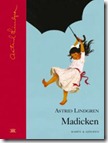
Madicken Madicken by Astrid Lindgren. This is a childhood favourite of mine and it was a great experience to re-read as an adult. It is a very sweet story about a young girl in Sweden during the first world war.


mrsdalloway Mrs Dalloway by Virginia Woolf. Reading this book is what inspired this weeks “What Caught My Fancy” since I enjoyed the book more after analysing and learning more about Woolf. It has a beautiful, if complicated, language.


Challenges

Not a challenge per say but I have joined the wonderful Spotlight Series. The Spotlight Series aims to shine a light on small presses that might not be able to promote their books in the way large publishers can. This series aims to showcase their titles in order to show you fantastic books you might not otherwise have found. The first small press is Unbridled Books and I will be reading The Distance Between Us by Masha Hamilton. Come and join the fun and help others discover a wonderful book. Oh and for those of you outside the US, most of Unbridled Books are available through Bookdepository.co.uk.

On the Blog

This week, apart from my reviews I also posted the first of my author portraits. This month I am featuring one of my favourite (probably the favourite) children’s book writers: Astrid Lindgren. She wrote so many beautiful books about childhood, many that made me whom I am today. Several of her books have been translated into English and are well worth a read by children and adults alike!

Copyright ©2010 Zee from Notes from the North.clip_image001This post was originally posted by Zee from Notes from the North. It should not be reproduced without express written permission.

Friday, 12 February 2010

Author Portrait: Astrid Lindgren

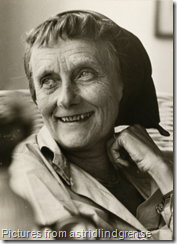
Astrid Lindgren

My favourite author growing up was without a shadow of a doubt Astrid Lindgren. As I grew up my admiration for her only grew. She was a tireless crusader for children’s rights both in Sweden and across the world. She was a single mother long before that became socially acceptable. She was a writer and an editor. And more than anything I think she was a mother, daughter and sister. She was always close to her family.

“We had two things that made it what it was—safety and freedom” (from Mitt Småland (astridlindgren.se))

Astrid grew up on a farm in Småland in the southern part of Sweden with loving parents and her three siblings. The children lived a happy life on the farm where they played but were also expected to help around the farm. According to Astrid herself her childhood was much like the one she later described in the books about in The Children of Noisy Village.

Sorry the video’s in Swedish, it shows a collection of scenes from the television adaptation of the books about the Children of Noisy Village.

In school Astrid had a teacher who encouraged her to write and often read her stories aloud to her classmates. At the age of thirteen she was published in the local paper, the same paper she worked for after finishing school. It was while working here she found herself pregnant but not married. She decided that she did not want to marry the father but instead moved to Stockholm. She had to leave her young son, Lars, in the care of foster parents and saved her money in order to visit him. While working she met the man who would become her husband, Sture, and when they were married she was able to bring her son home. Her and her husband also had a daughter, Karin. The family, moved to the apartment where Astrid would live the rest of her life, on Dalagatan with a view of Vasaparken.

When she left her home town she trained as a stenographer and worked as a secretary. Once she married Sture she stayed at home with the children, although she took odd jobs as an editor for her former employer and at conferences. When her first book Pippi Longstocking became a success in 1946 she also became the children’s book editor at the publisher Rabén & Sjögren.

As I previously mentioned she was also active in the political debate in the country, first through a tax rate scandal but later primarily regarding corporal punishment, which she was firmly against. Corporal punishment is now forbidden in Sweden, in part thanks to this woman.

The Books

Astrid Lingren was a prolific writer. As I was researching this entry I realised that I have not read all her books, something that I will try to remedy. Because not all of her books have been translated to English I will primarily feature those books that have, but also mention some that haven’t but that I think should!

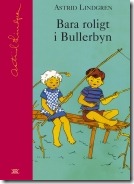
bara_roligt_i_bullerbyn_ The Children of Noisy Village, Happy Times in Noisy Village and Christmas in Noisy Village tell the story of the six children (actually there are seven but you will need to read the books to get that explanation) who live in Noisy Village (Bullerbyn). I love these books because, like so many of Lindgrens books they show an innocence in childhood that I love. In addition to this it reminds me a bit of my childhood. We lived in a cul-de-sac when I was growing up with several children my age. We all played together during long summers days and walked to school together. There is something magical in the ordinariness in these books.

pippilangstrumt_0 Pippi Longstocking is probably the most famous of Lindgren’s books and her first best seller. It tells the story of Pippi who lives on her own in a large rambly house with her monkey and horse. Pippi’s mother is an angel in heaven and her dad is the Chief of a South Sea Island. Pippi is incredibly strong and has a bag full of gold. She gets up to a lot of mischief with her two friends Tommy and Annika.

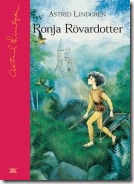
ronja_rovardotter Ronia, the Robber's Daughter is about Ronia who lives in a castle with her mum and dad and her dad’s band of robbers. One day she meets the son of her dad’s arch enemy and they become friends. The two of them run away one summer and live in a cave. Ronia is set in a medieval landscape where there are mythical creatures, some dangerous some are funny (I can still quote the rumpnissarna from the movies:D). This is a fantastic story of a strong young girl and her friendships.

broderna_lejonhjarta The Brothers Lionheart this story upset me when I was child. It is the story of Skorpan (who I think has had his name changed in the translation) and his brother Jonathan. Skorpan is sickly and Jonathan is the local hero. Jonathan tells stories to Skorpan while their mother works. One of the stories he tells is of Nangiala, the land one goes to when one dies. One day there is a fire and Jonathan rescues Skorpan but dies in the process (this happens with in the first few pages), a while later Skorpan too dies, but he is reunited with Jonathan in Nangiala and here the real adventure begins. It turns out that all is not well in Nangiala and the brothers get involved in a battle to free the world from a tyrant. It is a magical story of bravery and death and finding bravery within yourself. However, sensitive people should be aware that the book deals with death, something I found difficult as a child.

emil_i_lonneberga There are several books about Emil the mischievous young farm boy. Emil isn’t actually mean he just manages to get into a lot of scrapes and when he gets into these scrapes he gets sent, not to his room, but to the woodshed where he whittles animals until his father has calmed down.


lillebror_och_karlsson_pa_taket Karlson on the Roof imagine that one day a small round man with a propeller shows up at your window. This happens to a young boy in Karlson on the roof. The boy and the little man end up having a series of adventures. Again this a book I grew up with but I have to admit it wasn’t one of my favourite.


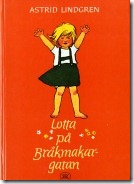
lottapabrakmakargatan Lotta on Troublemaker Street Do you have (or have you had, or were you yourself) a small girl with a stubborn streak in your life? If the answer is yes then you will love the books about Lotta on Troublemaker Street. Lotta refuses to give in to the fact that she is not as big as her big sister and big brother and this gets her in to no end of trouble. She also carries with her a stuffed pig. There is a certain amount of spunk to Lotta which I appreciate. This book is going to be a gift for a very special little girl in my life for her next birthday *shhhhh*

The following books are all books that are not yet translated to English but I think they should be.

Madicken Madicken (which I reviewed earlier this week) tells the story of a young girl and her sister. What I particularly like about this book is the lack of magic. It tells the ordinary life of an ordinary girl (just like Emil and The Children of Noisy Village).


masterdetektiven_blomkvist_0 Master Detective Kalle Blomkvist tells the story of two rival groups of friends who spend their summers passing the stone Stormumriken back and forth between each other.  However it is not as simple as that, the groups also manage to be witness or somehow get involved in different crimes in the sleepy town they live in. These are very sweet books. Kalle Blomkvist is referred to in the Millennium Trilogy.

kajsa_kavat_hjalper_mormor Kajsa Kavat when I was about four years old I LOVED this book. I used to have my parents read it to me all the time. It tells the story of Kajsa who lives with her grandmother who sells sweets at the market. One day grandmother breaks her leg. It is just before Christmas and their busiest season. Kajsa takes over the candy stand. The one thing Kajsa wants is a doll in the window of the toy store. I don’t think I was the only one who loved this book since Kajsa is one of the most popular girl names right now.

nils_karlsson_pyssling_flyttar_in Nils Karlsson Pyssling tells the story of a boy the size of a thumb. He lives under Bertil’s (a normally sized boy) bed. Bertil can visit Nils apartment by touching a nail and saying Killevippen.It is a beautiful story of friendship.


Biography

Astridlingren.se

Wikipedia

This was my first author portrait and I would love your input on it. Was there something you wanted more off? Something you wanted less off? Please comment.

Copyright ©2010 Zee from Notes from the North.clip_image001This post was originally posted by Zee from Notes from the North. It should not be reproduced without express written permission.

Thursday, 11 February 2010

Book Review: Mrs. Dalloway

mrsdalloway

Mrs. Dalloway  by Virginia Woolf

Category: Classical Fiction

Challenges: Women Unbound Challenge, GLBT Challenge

Synopsis: Mrs Dalloway tells of a day in life of Clarissa Dalloway, Septimus Warren and Peter Walsh. Clarissa and Peter have a past, Septimus is a troubled young man. The novel explores class and gender differences through Clarissa’s and Peter’s recollections of their past, their thoughts on their present and Septimus story.

My Thoughts: I was assigned this book for my grad school class on Theory of Literature. I say this because some of my opinions of this book come from before class and some from after class(I prefer it after class).

I found this book to be a bit hard to get into. The many names at the start were confusing and the sentence structure had my head spinning. As I mentioned in my Sunday Salon post last week I have some issues with assigned reading. This is a book I would have like to take my time with but I felt I had to rush through it in order to have it done in time for class (yes I could have started earlier but I am the kind of person who is grateful for ‘last minute’). 

All that said, now that I have read more about the book, Woolf’s thoughts on writing and such and discussed it with my classmates and teacher I have a much greater appreciation for the story and the writing.

I have a tendency to write either long rambly sentences that can benefit from punctuation or short simple subject-predicate sentences. I found her sentences difficult at first because she makes use of semicolons and commas. Now I use commas but I think the only time I have used semicolons in my writings was in the grammar class I took a couple of semesters ago. It took me a while to get used to them. Reading for class I realised that Woolf was trying to create a female style of writing. She was trying to do something different from the distinctly male cannon that was the status quo. In addition there is something inherently beautiful about sentences like this one:

It was precisely twelve o’clock; twelve by Big Ben; whose stroke was wafted over the northern part of London; blent with that of other clocks, mixed in a thin ethereal way with the clouds and wisps of smoke and died up there among the seagulls—twelve o’clock struck as Clarissa Dalloway laid her green dress on her bed, and the Warren Smiths walked down Harley Street (104).

Just the idea of time wafting in the air fills me with awe. Time in and off itself is as fleeting as smoke and to use the imagery of it as such paints such a beautiful picture.

Much of our discussion in class centred around feminist critique and if there are traits that are essentially female or essentially male. Personally I find it hard to believe that. I am pretty postmodern in my world view (see my post on White Noise for more on my views on postmodernism) so for me who we are is a bit floaty. This was something I greatly appreciated about Mrs Dalloway, she mixes the “typical” gender traits. No one (apart from the two doctors perhaps) are given stereotypical traits. I am sure we are all aware of traits that are often employed in order to make a woman more or less feminine in books and that just wasn’t the case here.

I found myself to feel the most for Septimus, I felt that he was the only character who had not had the opportunity to make himself his own. He had not been given a choice in following the rules of society and these rules broke him down and then could not deal with him afterwards. Clarissa on the other hand had a choice, she might not have had the choice she would have had today (when she would probably have chosen Sally) but she did have a choice between Peter and Richard and she chose Richard because he seemed safe. Richard symbolises society and safety. One of the articles we read for the class says:

Jean Wyatt argues that society insists on a rigidly defined and compartmentalized self because this formation of the self ‘reflects the pretense to permanence of the social institutions in which it is embedded…Society requires that people be circumscribed individuals so they can play the singular parts designed for them by social systems’. The powers controlling societal demands are determined to cast people into roles, regardless of individual needs or differences, in order to continue the stable stable system supporting their society” (Taylor*, 370).

This quote to me symbolises the trap in which many women find themselves in. Society expects certain things of women (this was even more true in Woolf’s time) and often the choice is narrow and the cost great for not choosing it. Clarissa was forced to choose, that is undoubtedly true, but the choice that she made might have seemed the lesser of two evils at the time, but ultimately it forced her to give up that which made her herself.

When I first read this book I found it difficult to follow but the more I think about it the more this book sticks with me. I would definitely want to read more of Woolf and if I had time I would join in Woolf in Winter, unfortunately the following months will be very hectic for me. If you want to read other peoples thoughts on Mrs Dalloway I suggest you head on over to Sarah’s and see what was said for the first Woolf in Winter book.

I normally like to have the cover picture of the book I actually read as the cover picture at the start of my posts, but the copy of Mrs. Dalloway that I read was the Penguin Popular Classic edition and they all have lime green covers with white text. Not so fun to look at but it is cheap and since I 1) am a poor gradstudent 2) like to write in books it is great to have cheap copies and I thought I would link to the cheap copy this time.

*Taylor, N. “Erasure of Definition: Androgyny in Mrs. Dalloway”, Women’s Studies, vol 18 (1991). 367-377

Copyright ©2010 Zee from Notes from the North.clip_image001This post was originally posted by Zee from Notes from the North. It should not be reproduced without express written permission.

Wednesday, 10 February 2010

Book Review: Madicken

Madicken Madicken by Astrid Lindgren

Category: Children’s chapter book

Challenges: Childhood Favourites, Women Unbound, Flashback

Synopsis: 7 year old Madicken lives with her parents, little sister Lisabeth and family maid Alma in a large house at the edge of town. Madicken has a knack for getting into trouble even when she doesn’t mean too. The book follows her through most of her first year in school in an episodic fashion. In addition to her family and Alma we also meet their teenage neighbour Abbe who Madicken intends to marry one day and an assortment of other residents of the small town and surrounding area. The story is set in Sweden during the First World War.

My Thoughts: This was a childhood favourite of mine. Like Madicken I have a bit of a stubborn streak, but I too love my younger sister (even when she drives me round the bend).

The book is episodic telling snapshot stories of the things Madicken and Lisabeth get up to. There is a great deal of innocence to the story that I loved as a child and possibly love even more now. The girls roam more or less free and make up games all on their own.

I can’t actually remember the first time my parents read to me but I can’t have been more than four or five. I do remember emulating Lisabeth at one point, in one of the stories she puts a pea up her nose (she likes putting things in other things to see if they fit). I didn’t put a pea up my nose, but much to my fathers distress I put a piece of apple in mine :D.

Astrid Lingren is one of my favourite children’s authors because she manages not only capture the innocence of childhood but also to give each individual character a voice of their own. She makes liberal use of dialect and children’s versions of different words, for example, Lisabeth says “abselut” instead of “absolut”. This enhances the uniqueness of each character and also makes it easier for children to follow along in the story.

Like The Little House on the Prairie books the books about Madicken (there is at least one more plus some picture books I think) helped shape the woman I am today. Madicken showed me the value of independence and curiosity. She helped me in my imaginative games (I liked exploring). She was anything but ladylike but still very much a girl, much like me.

 It is such a shame that this book has yet to be translated into English because it really is a fun beautiful read.

Not available in English at this point.


Copyright ©2009-2010 Zee from Notes from the North.clip_image001This post was originally posted by Zee from Notes from the North. It should not be reproduced without express written permission.

Tuesday, 9 February 2010

Teaser Tuesday: Mrs. Dalloway

clip_image001 

Teaser Tuesdays is a weekly bookish meme, hosted by MizB of Should Be Reading. Anyone can play along! Just do the following:

  • Grab your current read
  • Open to a random page
  • Share two (2) “teaser” sentences from somewhere on that page
  • BE CAREFUL NOT TO INCLUDE SPOILERS! (make sure that what you share doesn’t give too much away! You don’t want to ruin the book for others!)
  • Share the title & author, too, so that other TT participants can add the book to their TBR Lists if they like your teasers!

mrsdalloway

Aware that he was looking at a silver two-handled Jacobean mug, and that Hugh Whitbread admired condescendingly, with airs of connoisseurship, a Spanish necklace which he though of asking the price of in case Evelyn might like it—still Richard was torpid; could not think or move. Life had thrown up this wreckage; shop windows full of coloured paste, and one stood stark with the lethargy of the old, stiff with the rigidity of the old, looking in”.

From Mrs. Dalloway by Virgina Woolf (pg 125)