Wednesday, 10 March 2010

Book Review: The Commitments

The Commitments

The Commitments by Roddy Doyle

Category: Fiction

Synopsis: The Commitments tells the story of a group of working class individuals in North Dublin who form a soul band.

My Thoughts: This was a quick read but not really an easy one.

Most of the book is written in dialogue. Dialogue in dialect. I don’t mind a bit of dialect (It helps to distinguish characters sometimes) but when ALL the characters speak the same dialect it just becomes difficult to read and really quite annoying.

I read this book for school in conjunction with our class on Marxist critique of writing and this did actually make me like the book a bit more. We discussed the fact that the lack of distinguishing features of the band members enhances the sense of alienation, they are just a cog in the machinery. I still don’t like the device but I do understand it a bit more.

Short books are good. Except when they don’t lead to any character development at all. The book basically tells the story of a band that is formed and fall apart. Interesting. Except several of the pages are song lyrics in caps lock font. This simply leads to there being no story what so ever. I was just bored the whole time.

This wasn’t a book for me (again) but it did lead to some interesting discussions in class. I wouldn’t have minded discussing this a bit more but we had some technical issues today.

The movie based on the book is great. Highly recommend it!

Copyright ©2010 Zee from Notes from the North.clip_image001This post was originally posted by Zee from Notes from the North. It should not be reproduced without express written permission.

Tuesday, 9 March 2010

Teaser Tuesday: Anne of Avonlea


Teaser Tuesday
Teaser Tuesdays is a weekly bookish meme, hosted by MizB of
Should Be Reading. Anyone can play along! Just do the following:

  • Grab your current read

  • Open to a random page

  • Share two (2) “teaser” sentences from somewhere on that page

  • BE CAREFUL NOT TO INCLUDE SPOILERS! (make sure that what you share doesn’t give too much away! You don’t want to ruin the book for others!)

  • Share the title & author, too, so that other TT participants can add the book to their TBR Lists if they like your teasers!

Anne of Avonlea

A September day on Prince Edward Island hills; a crisp wind blowing up over the sand dunes from the sea; a long red road, winding through fields and woods, now looping itself about a corner of thick set spruces, now threading a plantation of young maples with great feathery sheets of ferns beneath them, now dipping down into a hollow where a brook flashed out of the woods and into them again, now basking in open sunshine between ribbons of goldenrod and smoke-blue asters; air athrill with the pipings of myriads of crickets, those glad little pensioners of the summer hills; a plump brown pony ambling along the road; two girls behind him, full to the lips with the simple, priceless joy of youth and life” (pg39).

It is just one sentence but I think it is long enough. Taken from Anne of Avonlea by L.M. Montgomery.

Copyright ©2009-2010 Zee from Notes from the North.clip_image002This post was originally posted by Zee from Notes from the North. It should not be reproduced without express written permission.

Sunday, 7 March 2010

The Sunday Salon: On Reading Childhood Favourites

image

What Caught My Fancy This Week (and kinda last week)

So I didn’t do a Salon post last week. I was in a funk and then I had a bit of an accident and got myself into more of a funk. I’ve had to snap myself out of the funk and am still recovering from the funk. I do want to warn my readers that the funks are likely to come frequently for the next couple of months as the deadline for my thesis draws nearer (final submission day is May 19th). I have taken steps to minimize the risk of funkdom setting in by booking myself on a mini vacation at the end of April (something to look forward too) and once I have read the final book for lit theory (only one left to read) my reading for pleasure should go up. Right now I have been feeling a bit guilty reading for pleasure when I know I have books to read for school, which has lead to little reading at all (my brain works in mysterious ways).

Okay now that that disclaimer is out of the way, on to my topic of the week: Reading Childhood Favourites! I am currently reading the last of my books for the Childhood Favourites Challenge hosted by Debbie of Debbie’s World of Books. During the week I got into a discussion with Eva and Nymeth on twitter (where all good ideas are born) about re-reading childhood favourites and their fear of reading them now as adults because they were worried that they would be changed for them. It is an interesting concept to me because I hadn’t actually thought of it that way.

My family tend to hyperfocus on things (my mum can probably quote Glee episodes at you verbatim and I KNOW I can do it with West Wing lines)  and this goes for books as well. This means that I have read many of my favourite books to shreds. Literally. I’ve had to buy new copies because the old ones had pages missing. Which books I tend to hyperfocus on goes in waves. But because of this I have read childhood favourites many times in many different seasons of life. And yes they do change. They change a lot. And I see new things. And sometimes I see things that annoy me now that I probably didn’t even notice as a kid. And that is both positive and negative. Take the books we were discussing on Twitter: The Little House on the Prairie series. I LOVED these books both as a child and as a teenager (my copy of These Happy Golden Years is not my original, it is copy I got from a friend when she heard mine had missing pages from being read to many times in junior high). I grew up with Laura. I recently re-read Little House on The Prairie, The Long Winter, Little Town on the Prairie and These Happy Golden Years (reviews pending on the last two) and a few things struck me that I am not sure I noticed as a kid. The first one is Ma’s hatred of Indians. I think we MIGHT have discussed it as a child but I honestly can’t remember. At first it really bothered me. I felt that the view that was being presented was not one that I would want children today to have. Then I realised that Pa’s view slightly tempered Ma’s view. Pa has a much more “modern” view. Plus I think that their different view’s can lead to discussions. Then we have the fact that the Indian’s are portrayed in a rather stereotypical way but to me this is a sign of the times when the books were written, again something that can be discussed. The second thing that I noticed and that made me think was the inclusion of religion in the school day. In once scene in (I think it was The Long Winter) the school day is started with reading Psalm 23. Now today that wouldn’t happen in a public school, here or in the states. It made me think about the differences then and now.

I guess what I am trying to say is that although I noticed different things now from when I read them as a kid, the books aren’t ruined for me, they are simply different. Reading them now serves a different purpose. Take one of my current reads, Anne of Avonlea, I had planned on reading this book for the Childhood Favourites Challenge, but the reason I chose to read it now was because I needed a dose of escapism. Anne of Avonlea was a book that I read, repeatedly, around the same time as I was reading These Happy Golden Years. Anne was as much my friend as Laura was. I admired both women (or should it be girls?) for their independence and spunk. I also admired Anne for her imagination. And it was that imagination I wanted. Anne sees things in the world that I occasionally catch a glimpse of, she has a quality I admire. I read these books knowing full well that I will find things that I didn’t find as a young girl. I read them knowing that they will now be different and maybe I will see my childhood differently. But I also read them knowing that they have the power to pull me back to a less complicated time, both in their setting but also in their ability to pull me back to MY childhood, with its good parts and its bad parts, a childhood that made me who I am, warts and all. And that for me can never be a bad thing.

Reviewed

Two weeks worth of reviews this week. Still not that many, see aforementioned funk.

disgrace

Disgrace by J.M. Coetzee. Really really did not like this book. Really. It made me feel a bit sick and is a major reason why I needed to read something fluffy to read.


Rapture in Death

Rapture in Death by J.D. Robb. Robb’s In Death series is a series of books I tend to hyperfocus on :). I have read this book several times and it never fails to make happy, in a weird way, I mean it is a murder mystery :D
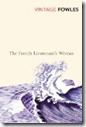
 

The French Lieutenant's Woman

The French Lieutenant’s Woman by John Fowles. A post modern novel that I really didn’t like. I don’t like it when the author tries to have a conversation with me in the middle of the story. Stick to the story OR have a conversation. Not both for me please.
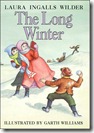
 

The Long Winter

The Long Winter by Laura Ingalls Wilder. Read on a whim on a cold and miserable day. It completely served its purpose as it cheered me up.


Currently Reading
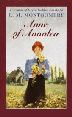
Anne of Avonlea

Anne of Avonlea by L.M. Montgomery. Anne never fails to cheer me up. Really she makes me happy happy happy, which is why I seriously considered signing up for the Anne of Green Gables Reread Challenge, but, alas I have to recognize my own limitations. I might read more Anne this year but I also want to expand my horizons a bit more.

feministphilosophy

Feminist Philosophy and Science Fiction: Utopia and Dystopia edited by Judith A. Little. I am reading this for my thesis and normally I wouldn’t put that in my currently reading file (I reserve this for books I intend to review and text books don’t normally get reviewed by me) but this book will not only be reviewed but highly recommended to anyone that is interested in Feminist philosophy and science fiction. It is an anthology of sorts with writings regarding feminist utopias and dystopias and it also has a introductions to feminist philosophy and dystopian and utopian ideas. I’ve only read the introduction and leafed through the rest of the book but that was enough for me to go online to buy my own copy. I need to make notes in the margin, it is that good. I will be counting it towards my Women Unbound Challenge, non-fiction (even if it has fictional elements).

Copyright ©2010 Zee from Notes from the North.clip_image001This post was originally posted by Zee from Notes from the North. It should not be reproduced without express written permission.

Thursday, 4 March 2010

Booking Through Thursday: Grammar

btt2

Every week Booking Through Thursday asks a question. This week the question is: In honour of National Grammar Day … it IS “March Fourth” after all … do you have any grammar books? Punctuation? Writing guidelines? Style books?

More importantly, have you read them?

How do you feel about grammar in general? Important? Vital? Unnecessary? Fussy?

elements-of-style Well I am a future English teacher, so yes, I have grammar books at home. Several of them actually. I have three books that are for ESL (my favourite is Engelsk Universitets Grammatik by Jan Svartvik, also known as the Silver Bible :D). I also have a copy of The Elements of Style by Strunk and White and Eats, Shoots & Leaves: The Zero Tolerance Approach to Punctuation by Lynne Truss. I have read all of them. Not cover to cover (except Eats, Shoots and Leaves) but large portions. I should also buy myself a copy of the MLA Handbook for Writers of Research Papers 7th Edition for gradschool but I haven’t gotten around to it yet.

I do think grammar is important. Grammar is an agreed set of rules that makes things easier to understand. I get tetchy when people use incorrect grammar. Especially when they make simple mistakes. Swedes in general have an issue with subject-verb agreement that drives me absolutely nuts. I had to sit on my hands yesterday when one of my masters level classmates used “do” instead of “does”. Sometimes I make grammatical errors, especially when speaking, often they are on purpose for effect. In order to do that you have to know the rule in the first place.

At home I am known as the grammar nazi because I will correct the family in both Swedish and English as well as people on tv. What can I say? Bad grammar annoys me :D

Copyright ©2010 Zee from Notes from the North.clip_image001This post was originally posted by Zee from Notes from the North. It should not be reproduced without express written permission.

Wednesday, 3 March 2010

Book Review: Disgrace

disgrace

Disgrace by J.M. Coetzee

Category: Fiction

Synopsis: Set in post-apartheid South Africa Disgrace tells the story of middle aged professor of literature David Laurie. Laurie takes advantage of a student (some synopsis state that he has an affair, to me this is misleading) and is found out. He is forced to leave is job and goes to stay with his daughter on her small farm. Then the unthinkable happens and life is forever changed.

My Thoughts: If it had been my choice this would have been a DNF. I didn’t like the main character. I didn’t like the events. I didn’t like the secondary characters. I just didn’t like it. It leaves me feeling really rather icky.

The main character has an unhealthy obsession with women in my opinion. He uses them for his own purposes and then sees himself as a slave of love. A martyr. But in my mind he has no understanding of what love or passion really is.

This was a book I read for my lit theory class, discussing post colonialism.  In class we spent a great deal of time discussing if the novel was inherently racist. Much criticism of the book has been that it and its author are racist. I do believe that the book perpetuates racist ideas. I think it shows ideas and attitudes that are prevalent not only in South Africa but also in other parts of the world.  Personally I am not sure I would ascribe a racist motive to the author himself. I feel that he is showing the problem of racism and I am not sure that someone could show these attitudes in this way if they themselves hold that attitude.

I found it very difficult to review this book. It has upset me greatly. The view on women and on atonement are ideas and views that I simply cannot buy into. I cannot except the way he treats women. Women in the story are merely things. Although the main character does in some ways change his views on what he has done he doesn’t change enough for me. Although I don’t agree with Lucy’s actions I can to understand her wish to own what happened (don’t agree with it but I can understand it) and so Laurie’s lack of understanding for her actions and unwillingness to let that go I feel perpetuates the wrong. He isn’t helping he is also trying to take away her right to choose. My teacher believes that he excepts her actions in the end. I didn’t feel this way. I don’t think he fully excepts her actions.

All in all not a book I personally would recommend but several of my classmates liked it. It simply upset me to much. I’m going to and read something fluffy now. With lots of kittens and bunnies and other nice things. Or perhaps some AnneGirl.

Copyright ©2010 Zee from Notes from the North.clip_image001This post was originally posted by Zee from Notes from the North. It should not be reproduced without express written permission.

Tuesday, 2 March 2010

Teaser Tuesday: Ceremony in Death

Teaser Tuesday

Teaser Tuesdays is a weekly bookish meme, hosted by MizB of Should Be Reading. Anyone can play along! Just do the following:

  • Grab your current read
  • Open to a random page
  • Share two (2) “teaser” sentences from somewhere on that page
  • BE CAREFUL NOT TO INCLUDE SPOILERS! (make sure that what you share doesn’t give too much away! You don’t want to ruin the book for others!)
  • Share the title & author, too, so that other TT participants can add the book to their TBR Lists if they like your teasers!

ceremony-in-death

I think she made me. Can’t be sure, but it’s almost as though she’s leading me along now. I’m going to have to make a move soon” (61).

From Ceremony in Death by J.D. Robb

Monday, 1 March 2010

Read in February

readingbooks1 by d0rk_icons

February was actually a really good reading month. I read 9 different books.

Rapture in Death by J.D. Robb

Madicken by Astrid Lindgren

The Souls of Black Folk by W.E.B. Du Bois

The Long Winter by Laura Ingalls Wilder

White Noise by Don DeLillo

The French Lieutenant’s Woman by John Fowles

Mrs Dalloway by Virginia Woolf

Freedom in Exile: The Autobiography of the Dalai Lama by The Dalai Lama

I also read Little Town on the Prairie by Laura Ingalls Wilder which I have yet to review. I did however also post a review of History of the Medieval World by Susan Wise Bauer.

I also posted an author portrait of Astrid Lindgren, one of my favourite authors.

My favourite was beyond a shadow of a doubt The Souls of Black Folk. It’s been a long time since a book affected me in the way this one did. It felt incredibly relevant still plus it had beautiful language. I also really liked Freedom in Exile. I thought it was an excellent mixture of spirituality and history. It really helped me to understand and solidify ideas. I want to continue learning about Tibet and Buddhism.

My two least favourite where White Noise and French Lieutenant’s Woman. Both of these I read for school. Both were postmodern. I am sensing a pattern. I just don’t like postmodern literature. I can by in the the fractured idea of postmodernism but I like my literature to have a more old-fashioned structure. I don’t require there to be no twists (I like twists) but many postmodern novels seem so pointless. The characters just end up where they began and I refuse to believe that we do not grow through the people we meet and the experiences we have.

Copyright ©2010 Zee from Notes from the North.clip_image001This post was originally posted by Zee from Notes from the North. It should not be reproduced without express written permission.